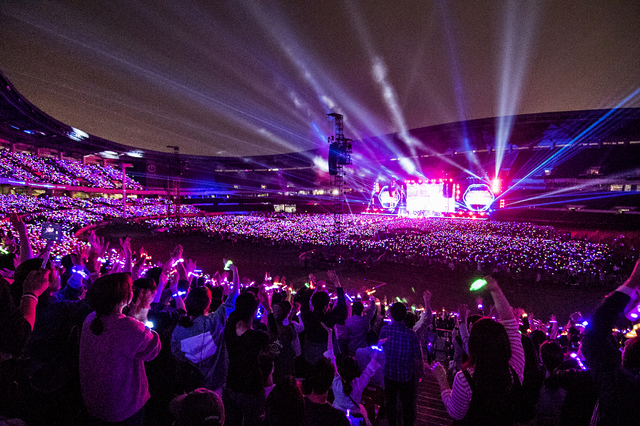
With the development project of the Jamsil Sports Complex area, a mecca for large-scale concerts in Korea, on the horizon, the popular music performance industry is demanding the creation of alternative spaces.
The Korea Association of Popular Music Performance Industry (KAPPI) announced a statement on the 13th, urging the establishment of a phased construction plan for performance facilities and the preparation of alternative venues, as well as the participation of an expert advisory group from the performance sector, following the announcement of the Jamsil Sports · MICE Complex Development Project promotion plan.
According to the association, the Seoul Metropolitan Government recently announced the Jamsil Sports · MICE Complex Development Project, which is being pursued as a super-large private investment project.
This project is a super-large private project that will invest over 2 trillion won in a 350,000㎡ area around the Jamsil Sports Complex to create a convention facility and hotel three times the size of COEX, and will also relocate the Jamsil Baseball Stadium.
However, the Jamsil Main Stadium, auxiliary stadium, and indoor gymnasium in this area have been venues for large domestic and international performances and festivals, attracting millions of cultural and artistic audiences annually. If the development project proceeds as planned, the performance industry will lose the stage for singers for over four years during the construction period.
In particular, the Jamsil Main Stadium has been the performance stage for major Korean singers such as Cho Yong-pil, BTS, Lee Moon-sae, PSY, Seo Taiji, and Lee Seung-hwan, as well as global superstars like Michael Jackson, Paul McCartney, Coldplay, Elton John, and Maroon 5. It is also the only venue in the country that can accommodate approximately 50,000 spectators.
According to the utilization status for the five years from 2014 to 2018 by the Seoul Metropolitan Facilities Management Corporation, over 50% of the usage of the Jamsil Main Stadium, auxiliary stadium, and indoor gymnasium was for cultural and artistic events, making it the most frequent use.
The rental fees, estimated from user payments, amounted to 33.5 billion won over five years. Including various additional costs such as parking, food and beverages, currency exchange, and facility restoration, it is estimated that at least over 10 billion won was invested annually.
The Record Performance Association stated, "Since the 1988 Seoul Olympics, the performance industry has helped the Jamsil Sports Complex grow into a mecca for large-scale cultural and artistic performances in Seoul, and by providing 8% of ticket sales as rental fees, we have contributed more than anyone else to the stadium's operation.".
Despite this, the KAPPI expressed regret, stating, "We have been receiving rental fees after excluding dates for government events and sports matches, and not only have we faced significant discrimination in rental fees, but the development plan, which guarantees the future, has proceeded without reflecting the opinions and intentions of the performance industry.".
The Record Performance Association strongly argued, "It is not too late, and we hope that our intentions will be reflected through expert consultation and communication from the performance industry regarding the overall performance venue facilities, and we request appropriate reconsideration measures from the Ministry of Culture, Sports and Tourism and the Seoul Metropolitan Government.".
They added, "Currently, the performance industry is enduring the pain of long closures due to COVID-19, and is preparing for performances while awaiting a near future where social distancing will be eased through vaccination and various quarantine measures." "Despite these efforts, the disappearance of performance venues is a matter of the industry's fate and the livelihood of performance workers.".
Article Source: ⓒnewsis.
 These are English translations of articles from our GTTOUR Japanese website. These are English translations of articles from our GTTOUR Japanese website. |



 NOW! KOREA
 Official Member of the Korea Association of Travel Agents (KATA)


